

Windows Management Instrumentation (WMI) is Microsoft’s implementation of Web‑Based Enterprise Management (WBEM). Essentially, it provides a unified way to manage devices and applications across Windows‑based systems. Moreover, you can create WMI scripts or applications to automate administrative tasks on remote machines. In addition, WMI supplies management data to other parts of the operating system and to several Microsoft products, such as System Center Operations Manager (formerly MOM) and Windows Remote Management (WinRM). Because of this, administrators and IT professionals can use WMI to centralize operations, streamline automation, and improve visibility across their environments.
📝 One-Minute Brief
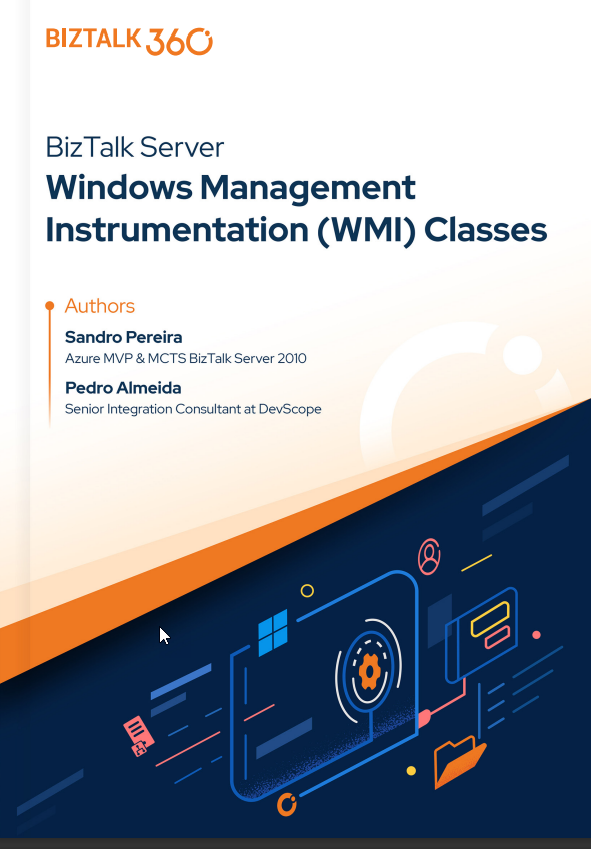
A practical whitepaper that explains how BizTalk Server exposes its administration and operational features through Windows Management Instrumentation (WMI). It covers the core BizTalk WMI classes, their purposes, and how they can be used—especially through PowerShell—to automate tasks, query BizTalk configuration, and manage infrastructure components such as hosts, adapters, message instances, queues, and orchestrations.
WMI is designed for programmers who use C/C++, Microsoft Visual Basic, or scripting languages that run on Windows and support Microsoft ActiveX objects. However, many administrators and IT professionals prefer to access WMI through PowerShell instead. For example, the PowerShell Get-WMI cmdlet lets you quickly and efficiently retrieve information from a local or remote WMI repository.
In addition, Microsoft includes WMI by default in all modern Windows operating systems, making it readily available to administrators. As a result, WMI helps teams manage different Windows environments, including remote systems, with greater consistency. Furthermore, one of its biggest advantages is the ability to reduce maintenance tasks and lower the overall cost of managing enterprise network components.
BizTalk Server WMI classes
Windows Management Instrumentation (WMI) classes are used to programmatically access the administrative functions available in Microsoft BizTalk Server. Working together with PowerShell will be a winning match for IT Teams that need to manage BizTalk Server infrastructure and applications.
The Windows Management Instrumentation (WMI) classes in this table are used to manage the core objects associated with BizTalk Server, such as servers, queues, groups, and message handlers.
| Class | Description |
| MSBTS_AdapterSetting | Registers new adapters with Microsoft® BizTalk® Server. |
| MSBTS_BTSObject | This type of member supports the BizTalk Server infrastructure and is not intended to be used directly from your code. |
| MSBTS_DeploymentService | Encapsulates BizTalk assemblies for deployment or undeployment and bindings export or import. |
| MSBTS_GroupSetting | Represents a logical grouping of BizTalk Servers. |
| MSBTS_Host | Represents a BizTalk Server Host. |
| MSBTS_HostInstance | Represents a single instance of a BizTalk Host. |
| MSBTS_HostInstanceSetting | Updates the IsDisabled property when a host is in the stopped state. |
| MSBTS_HostQueue | Represents an application. |
| MSBTS_HostSetting | Creates a BizTalk Server Host setting. |
| MSBTS_MessageInstance | Represents a message instance. |
| MSBTS_MessageInstanceSuspendedEvent | Represents a suspended event for a BizTalk Message Queuing (MSMQT) message instance. |
| MSBTS_MsgBoxSetting | Represents a single MessageBox setting in the BizTalk Server group. |
| MSBTS_Orchestration | Represents an instance of an orchestration that belongs to the installed module. |
| MSBTS_ReceiveHandler | Represents an individual receive handler defined by BizTalk Server. |
| MSBTS_ReceiveLocation | Represents an individual receive location defined by BizTalk Server. |
| MSBTS_ReceiveLocationOrchestration | Represents all possible combinations of receive locations and orchestrations. |
| MSBTS_ReceivePort | Represents an individual receive port defined by BizTalk Server. |
| MSBTS_SendHandler | Represents an individual send handler defined by BizTalk Server. |
| MSBTS_SendHandler2 | Represents an extended individual send handler defined by BizTalk Server. |
| MSBTS_SendPort | Represents an individual send port defined by BizTalk Server. |
| MSBTS_SendPortGroup | Represents a group of send ports defined by the BizTalk Server. |
| MSBTS_SendPortGroup2SendPort | Represents an extended group of send ports defined by the BizTalk Server. |
| MSBTS_Server | Represents computers within a group that have BizTalk Servers installed. |
| MSBTS_ServerHost | Reflects mappings between BizTalk servers and BizTalk Hosts. |
| MSBTS_ServerSetting | Represents specific computers within the BizTalk group that have BizTalk Servers installed. Instances of this class are intended to be created and deleted internally through BizTalk Server only. Do not create or delete instances of this class explicitly through WMI. |
| MSBTS_Service | This type of member supports the BizTalk Server infrastructure and is not intended to be used directly from your code. |
| MSBTS_ServiceInstance | Provides an instance of service with a start and stop functionality. |
| MSBTS_ServiceInstanceSuspendedEvent | Represents a suspended event for a service instance. |
| MSBTS_Setting | This type of member supports the BizTalk Server infrastructure and is not intended to be used directly from your code. |
| MSBTS_TrackedMessageInstance | Represents a message instance. |
| MSBTS_TrackedMessageInstance2 | Represents an updated message instance. |
What’s in store for you?
This whitepaper provides a comprehensive overview of all BizTalk Server WMI classes and explains how to use them effectively. In addition, each WMI class includes a practical PowerShell sample so you can easily apply these concepts in real BizTalk Server scenarios.
Where can I download it?
You can download the whitepaper here:
Hope you find this helpful! If you liked the content or found it useful and would like to support me in writing more, consider buying (or helping to buy) a Star Wars Lego set for my son.