
Forgetting Credentials Happens (More Often Than We Admit)
Are you as careless as I and constantly forget credentials that aren’t critical? If so, this guide on how to reset the built‑in Administrator account password on an Azure BizTalk VM can save you a few hours of frustration.
Most consultants struggle with system credentials. We manage personal accounts, corporate identities, and multiple client credentials at the same time. Each system adds its own password rules and complexity requirements. Keeping track of everything is not easy.
When Resetting a Password Is Easy (and When It Isn’t)
In most enterprise environments, the solution is simple. We contact the system administrator and ask for a password reset. That approach usually works fine.
However, things get more complicated with Azure virtual machines that we create ourselves. This is especially true for demo, proof‑of‑concept, or training environments that live inside our own Azure subscriptions.
The Azure BizTalk VM Problem
I frequently create and delete BizTalk Server Developer Edition virtual machines. I use them for POCs, workshops, and training courses. And, more often than I would like to admit, I forget the built‑in Administrator password.
At that point, a simple reset is no longer obvious. Rebuilding the virtual machine would waste time and effort. So the real question becomes: how can we reset the built‑in Administrator account password on an Azure BizTalk Server VM without rebuilding it?
Scope and Applicability
Although I refer specifically to an Azure BizTalk Server VM, this approach applies to any type of Azure virtual machine. I focus on BizTalk only because this blog targets Enterprise Integration topics.
📝 One-Minute Brief
A practical recovery guide that explains how to regain access to an Azure virtual machine hosting BizTalk Server after losing the built‑in Administrator password, using Azure VM capabilities instead of rebuilding the environment.
Most of the time, the answer is very simple:
- You access the Azure portal (https://portal.azure.com/) and select the Virtual Machine that you want to reset the password for.
- Then click Support + Troubleshooting > Reset password. The password reset blade is displayed:
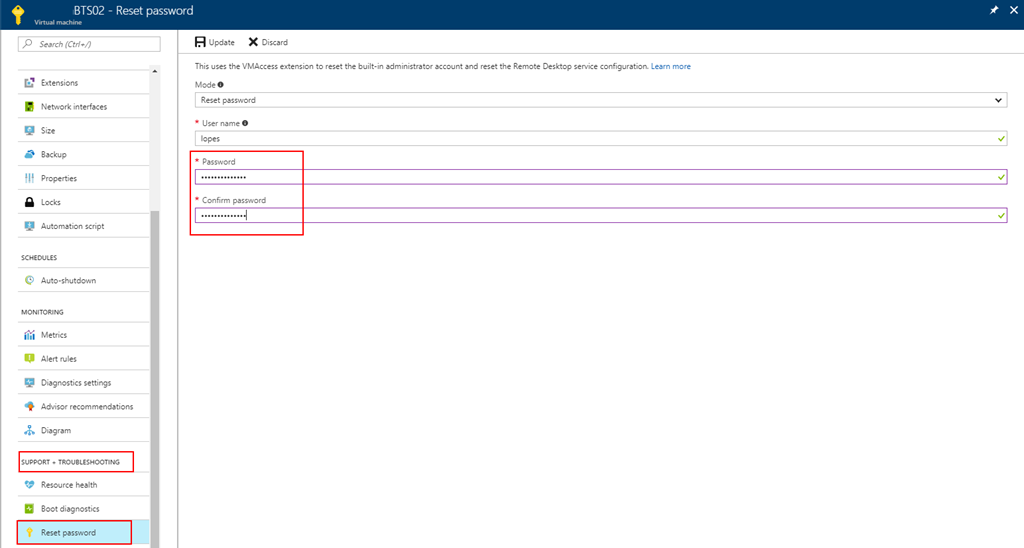
- You just need to enter the new password, then click Update. And you will see a message in the upper-right corner indicating that the reset password task is processing.
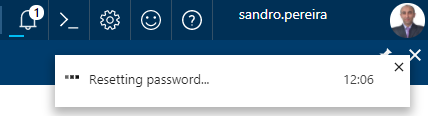
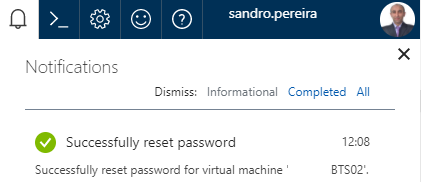
- The result of the task will be presented in the Notification panel, and most of the time, you will find a Successfully reset password message
But there is always “an exception to the rule”, and that was one of my cases. When I tried to reset the password through the Azure Portal, I kept getting an “Unable to reset the password” message; I don’t know exactly why, to be honest. I tried to reset the password by using PowerShell, as described in the documentation: How to reset the Remote Desktop service or its login password in a Windows VM.
Set-AzureRmVMAccessExtension -ResourceGroupName "myResoureGroup" -VMName "myVM" -Name "myVMAccess" -Location WestUS -typeHandlerVersion "2.0" -ForceRerun
But still, I was not able to perform this operation, and I was getting this annoying error:
…Multiple VMExtensions per handler not supported for OS type ‘Windows’. VMExtension. VMExtension ‘…’ with handler ‘Microsoft.Compute.VMAccessAgent’ already added or specified in input.”
Solution
To solve this problem, I was forced to remove the existing VM Extension by:
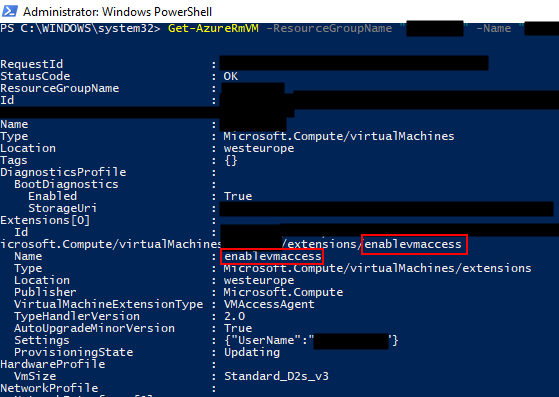
- First, by getting the list of extensions on the VM to find the name of the existing extension (presented in red in the picture below)
Get-AzureRmVM -ResourceGroupName [RES_GRP_NAME] -VMName [VM_NAME] -Status
- And then by removing the VMAccess extension from the virtual machine:
Remove-AzureRmVMAccessExtension -ResourceGroupName [RES_GRP_NAME] -VMName [VM_NAME] -Name [EXT_NAME]
- You will get a validation question. This cmdlet will remove the specified virtual machine extension. Do you want to continue? Type “y” and then ENTER to accept and continue.

After that, you can access to the Azure portal, select the Virtual Machine you want to reset the password for, click Support + Troubleshooting > Reset password, and update the built-in administrator account password without the previous problem.

Hope you find this helpful! If you liked the content or found it useful and would like to support me in writing more, consider buying (or helping to buy) a Star Wars Lego set for my son.