

My first concerns when I decided to migrate my BizTalk Server 2006 environment to BizTalk Server 2010 were:
It is easy to migrate a VS 2005 solution to VS 2010? All the BizTalk artifacts (schemas, orchestrations, …) will work? What precautions I should have? …
This may sound simple enough, but almost every person that I have spoken to and who is planning to migrate from BizTalk Server 2006 or 2006 R2 has the exact same concerns.
So far, I have not checked any issues after migrating from an old solution to VS 2010. The migration is very easy. Just follow the wizard, and all BizTalk artifacts work well.
The only concern that I found is that if you use C# libraries for the orchestration or map support, you should check for deprecated features/methods and correct them.
📝 One-Minute Brief
Upgrading to BizTalk 2010 requires migrating your projects to Visual Studio 2010. This process is largely automated via the Visual Studio Conversion Wizard, which handles project file updates and .NET Framework targeting. Key steps include opening the legacy .sln file, following the wizard’s prompts, and manually verifying assembly references (like Microsoft.XLANGs) and strong name key paths to ensure a successful build in the new environment.
My suggestions are
- Do not deploy BizTalk Applications using old MSI files (MSI generated in BizTalk 2006, R2, or 2009). First, migrate the project, rebuild the project using VS 2010, and then deploy the Application.
- Depending on your needs, options, or opportunities, you should consider using the WCF adapters:
- WCF-SQL Adapter instead of SQL Adapter
- WFC-WSHttp or WCF-BasicHttp instead of using the SOAP Adapter.
Visual Studio Conversion Wizard
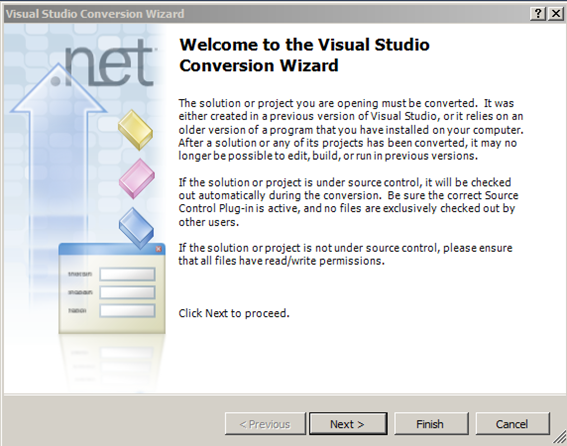
- Open the BizTalk Visual Studio solution to open the Visual Studio Conversion Wizard. Click Next.
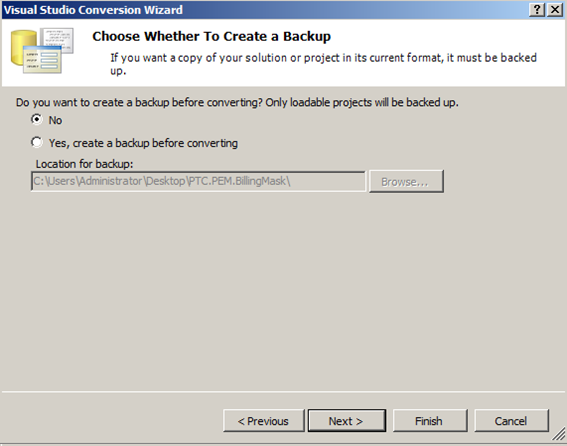
- On the Choose Whether To Create a backup screen, choose No and click Next (if you want, you can choose Yes… and select the backup location)
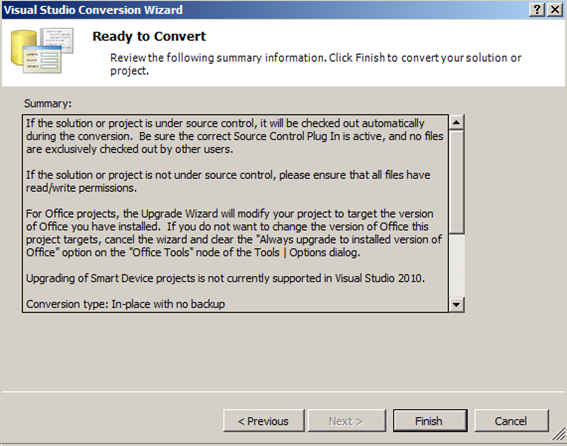
- In the Ready to Convert screen, review the summary and click Finish.
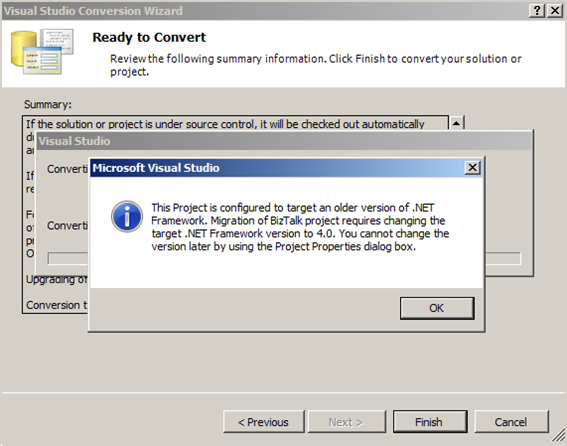
- It will appear with information regarding migrating to a new .NET Framework. Press OK.
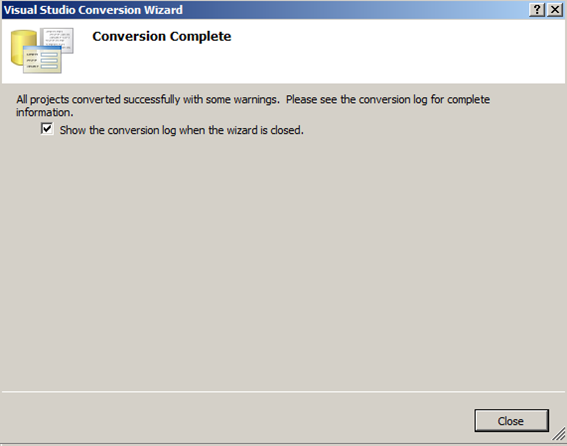
- In the Conversion Complete screen, you choose to see the conversion log, select the Show the conversion log when the wizard closed option, and click Close to finish the migration.