


Why hardcoding APIM policies becomes a problem
When working with Azure API Management (APIM), hardcoding values such as backend URLs, API keys, or environment‑specific settings inside policies quickly becomes difficult to manage.
Every environment change introduces risk.
Every secret update forces a policy change.
Over time, policies become harder to read, maintain, and deploy.
That’s where Named Values come in.
Introducing Named Values in Azure API Management
Named Values solve this problem by allowing you to store configuration values centrally inside APIM and reference them dynamically inside policies.
You can use Named Values for:
- Backend service URLs
- Subscription or API keys
- Feature flags
- Environment‑specific configuration
Because Named Values live outside the policy definition, you can change the configuration without editing the policy code.
📝 One-Minute Brief
Explains how Azure API Management Named Values help avoid hard‑coded configuration in policies by centralizing URLs, secrets, and environment‑specific settings, including secure integration with Azure Key Vault.
Why is this useful?
Instead of writing this inside your policy, because this approach tightly couples configuration with policy logic:
<set-backend-service base-url="https://dev-api.contoso.com" />
You can define a Named Value in APIM:
Name: backend-url
Value: https://dev-api.contoso.com
And then add a reference in your policy like this:
<set-backend-service base-url="{{backend-url}}" />
This immediately improves clarity and flexibility.
Key benefits of using Named Values
- Easy environment switching: Change values for Dev, Test, or Production without touching policies.
- Improved security: Store secrets securely, especially when backed by Azure Key Vault.
- Cleaner policies: Policies focus on behavior rather than configuration noise.
- Faster deployments: Reduce manual edits and lower deployment risk.
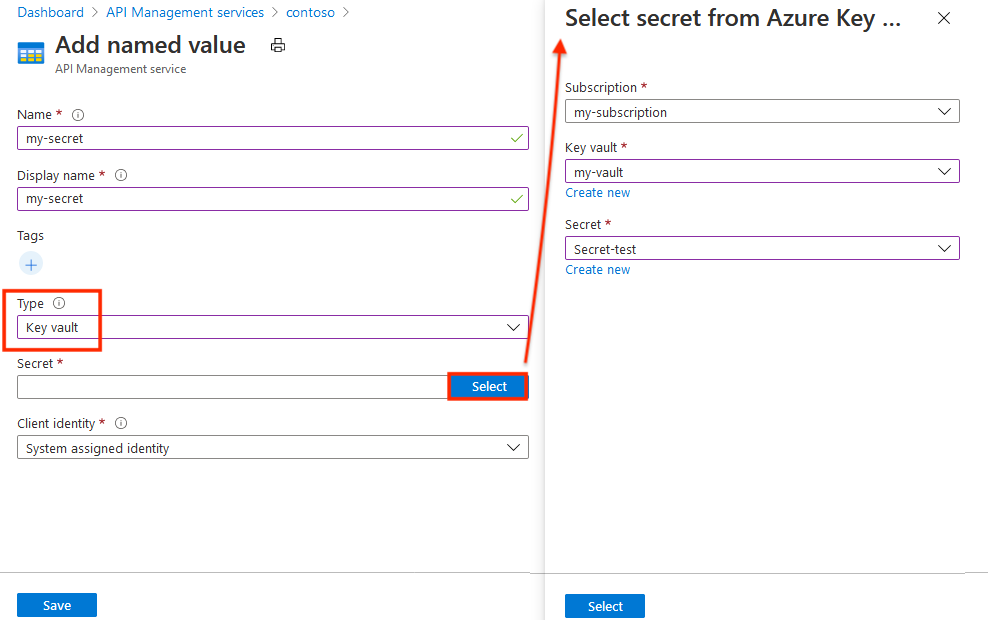
You can even integrate Named Values with Azure Key Vault to securely store secrets and rotate them without modifying your API policies.
Final thoughts
Named Values are a simple but powerful feature in Azure API Management. They improve security, reduce configuration drift, and make policies easier to maintain and deploy.
If you are still hardcoding values inside your APIM policies, Named Values should be your next refactoring step.
To lazy to read? We’ve got you covered! Check out our video version of this content!
Hope you find this helpful! If you enjoyed the content or found it useful and wish to support our efforts to create more, you can contribute towards purchasing a Sauron’s Action Figure for Sandro’s son, yep, not for me!



