

An interesting fact about default retry policies on logic app connectors is the fact that these default retry policies vary depending on the connector, for example on HTTP connectors, if we use them to send a request to a service, in this example a Logic App, and if that service suffers a Delay, the connection is established for approximately 11 to 12 minutes, where 4 retries are made before abandoning the request, and fail.

However, when you use a Logic App connector to perform the same task—such as calling another Logic App—the behavior changes significantly. In this scenario, delays on the target Logic App do not have the same impact. In fact, the connector continues to wait and retry for a much longer period, making it far more resilient by default.
📝 One-Minute Brief
Azure Logic Apps connectors behave very differently from generic HTTP actions when it comes to default retry policies and timeouts. This Friday Fact explains why built‑in Logic App connectors are more resilient than HTTP connectors, how they handle retries by default, and why this distinction is critical when designing reliable and enterprise‑grade integration workflows.
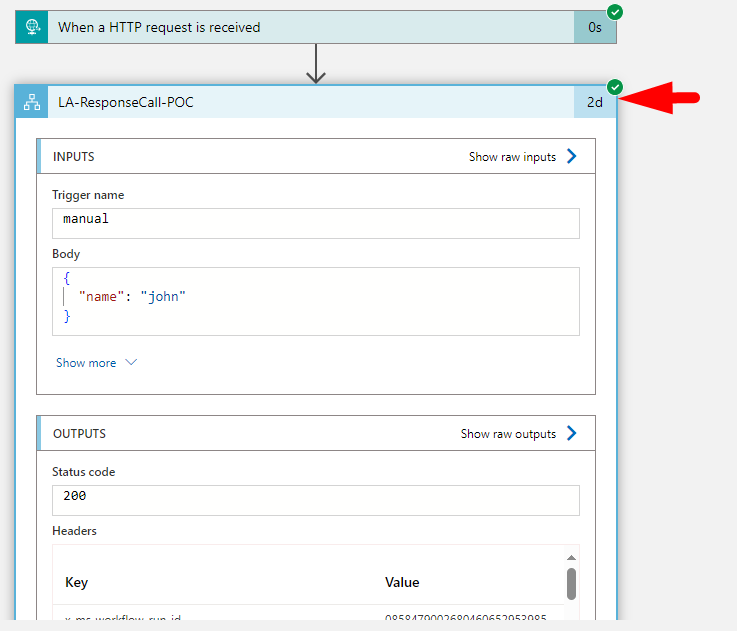
This was the Logic App we called in both scenarios. In each case, we expected the Logic App to respond after the configured delay.

As you can see from this HTTP request in the main workflow, the Logic App failed after four retry attempts. The total execution time was approximately 11 minutes before the request ultimately failed.

If we now look at the same request using a Logic App connector, we can see it lasted 2 days without failing.
An interesting detail is that both connector settings display the same configuration information:

A retry policy applies to intermittent failures, characterized as HTTP status codes 408, 429, and 5xx, in addition to any connectivity exceptions. The default is an exponential interval policy set to retry 4 times.
Now we are testing it for a week, but our gut says it’s going to last without failing.


This behavioral difference between HTTP actions and Logic App connectors can be useful in certain scenarios. Logic App connectors provide a more robust retry mechanism by default. As a result, they handle long‑running or unreliable services more effectively without failing. This behavior is an important consideration when designing resilient integration workflows.
To lazy to read? We’ve got you covered! Check out our video version of this content!
Hope you find this helpful! If you enjoyed the content or found it useful and wish to support our efforts to create more, you can contribute towards purchasing a Star Wars Lego for Sandro’s son!