

In the previous post of this series, I described a confusing behavior in the Logic App Adapter. Although it is not an actual issue, the experience could be better. In that case, the Sign‑in to Azure action did not respond.
Today, I will cover another behavior in this series. All of them relate to Azure authentication in the Logic App Adapter, available on the Endpoint Address Configuration – Logic App Details page
📝 One-Minute Brief
Managing Azure authentication in the BizTalk Server Logic App Adapter can surface confusing UI behaviors. This article explains how incorrect sign‑in account information may appear after aborting the Azure authentication flow and why this behavior, although misleading, reflects how the adapter stores authentication context.
Incorrect Sign-In account information
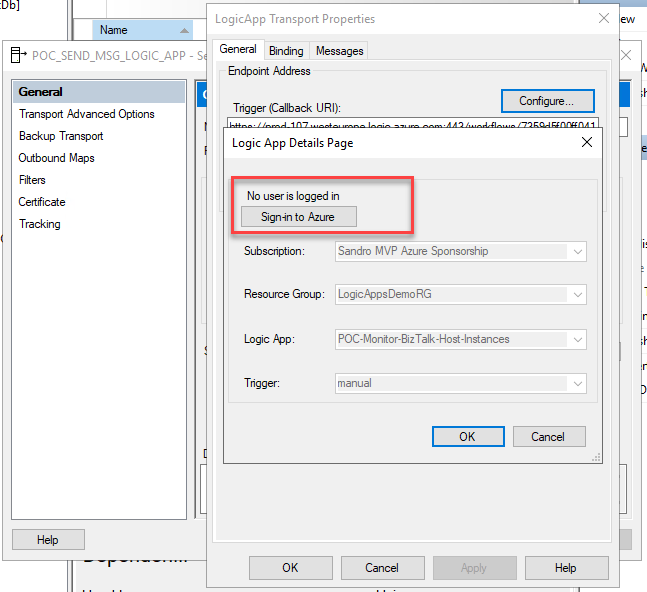
In the first post of this series, I described the No user is logged in behavior. Although this missing information does not affect the send port’s execution, it would help platform administrators during configuration and maintenance.
Now, imagine that after some time—one week or even a month—you open the same send port again. The configuration still displays No user is logged in.
Or even if we create the port, and there is an account defined there, let’s say my email account.
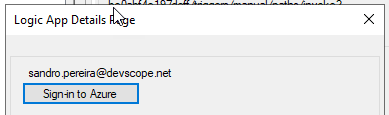
If we click Sign-in to Azure again, no matter whether an account is displayed there or not. This will pop up a Log in to your account window, and let’s assume:
- Initial we had to authenticate using my account: sandro.pereira@devscope.net.
- But now we are going to select a different account.
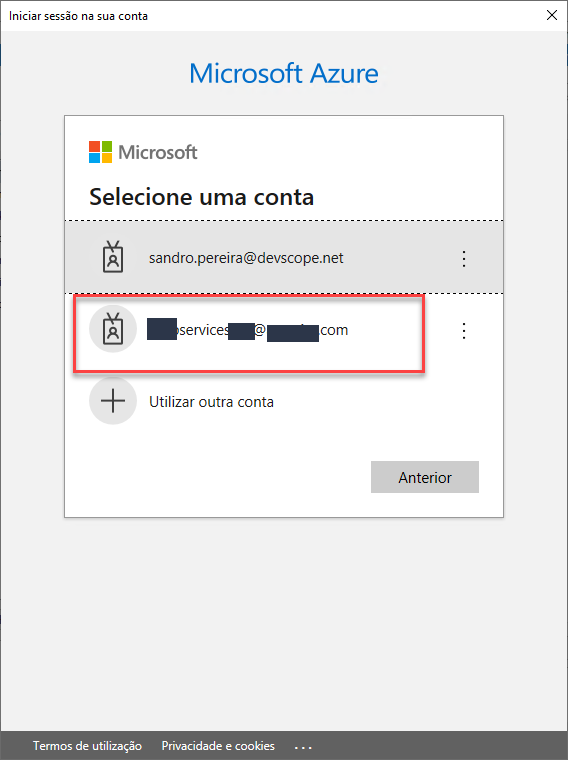
Note: Sorry for the picture being in Portuguese 🙂
After selecting the account, the system prompts you for the password. You enter the password and start the sign‑in process. Unexpectedly, another screen appears and asks you to provide additional details, such as a phone number, email address, and security questions.
If you do not want to provide this information, or you are not responsible for this configuration, you can cancel the process by clicking Cancel.
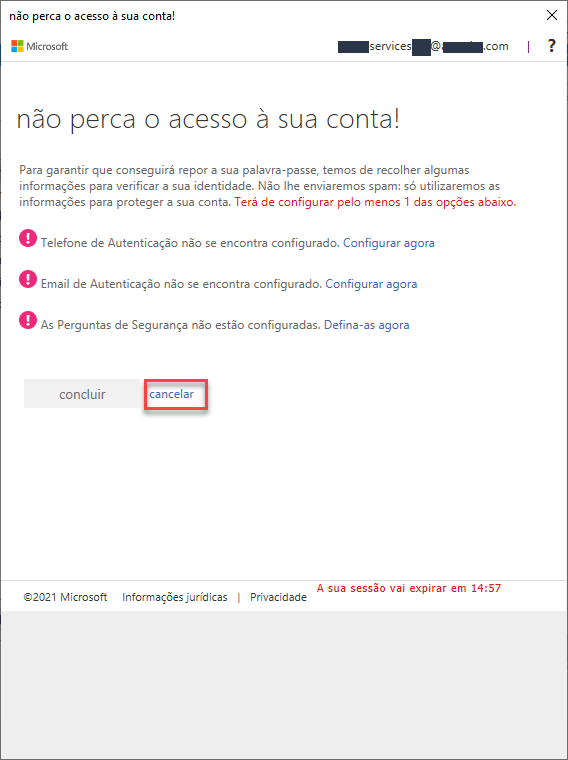
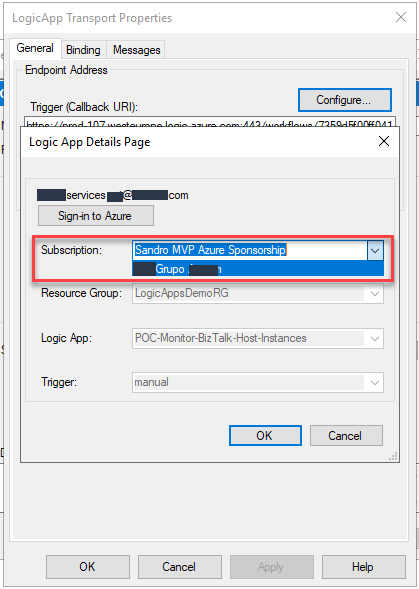
When you return to the Logic App Details page in the BizTalk Server Administration Console, the adapter displays the account you selected during the authentication process—even if you canceled it. Although this behavior may seem confusing, it is not incorrect. You successfully authenticated with Azure, and the console correctly shows the available subscriptions:
- The Resource, Logic App, and Trigger are gray because the user I used doesn’t have access to that subscription; instead, it has access to a different one.
Now imagine that you realize you made a mistake. You cancel the process by clicking Cancel several times to discard any changes (3 times). When you return to the send port configuration, the console still displays the previous account.
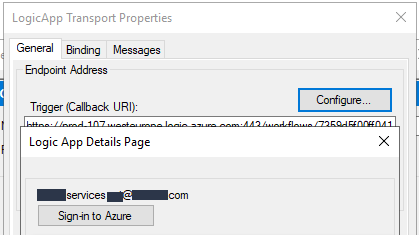
Again, this behavior is not entirely wrong. The console displays the last Azure account used for authentication, even if that account did not configure the port. However, this design creates a poor user experience and can easily mislead BizTalk Server administrators. The displayed account neither configured the port nor has access to the selected subscription.
In my opinion, the console should always display the last account that successfully configured or modified the port.
To hide/clean this information, you must close and reopen the BizTalk Server Administration Console. After reopening it, the port shows No user is logged in. This behavior is also far from ideal and may confuse administrators once again.
Hope you find this helpful! If you liked the content or found it useful and would like to support me in writing more, consider buying (or helping to buy) a Star Wars Lego set for my son.